

Unlocking the Brilliance of Pear Shaped Lab Grown Diamonds
What is a Pear Shaped Lab Grown Diamond?
A pear shaped lab grown diamond combines the brilliance of a round diamond with the neat point of a marquise cut, creating a stunning teardrop silhouette that's both timeless and modern.
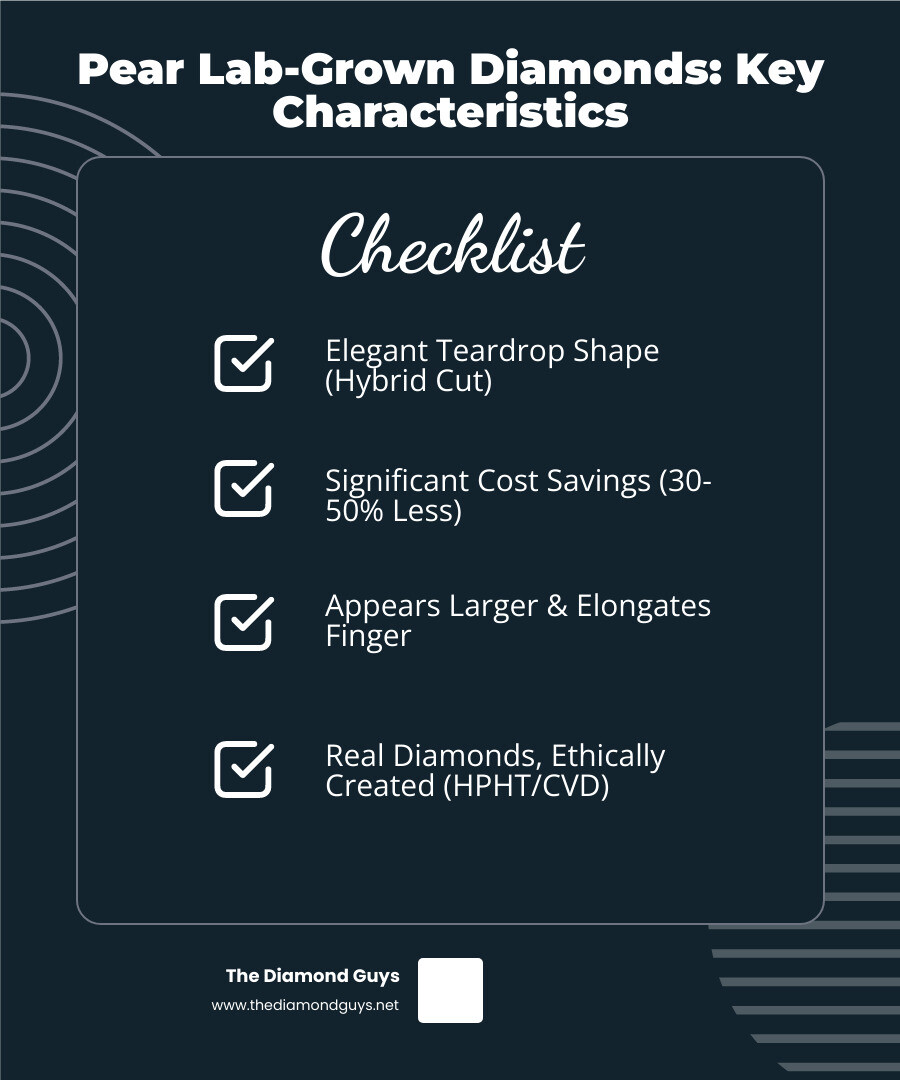
Key characteristics of pear shaped lab grown diamonds:
- Shape: Teardrop design with one rounded end and one pointed end
- Facets: 58 facets for maximum sparkle and brilliance
- Creation: Made in laboratories using HPHT or CVD processes
- Properties: Identical to mined diamonds in hardness, brilliance, and durability
- Size advantage: Appears larger than round diamonds of the same carat weight
- Cost: 30-50% less expensive than natural pear diamonds
This unique cut represents a hybrid of the round brilliant and marquise shapes, offering the best of both worlds. The pear shape dates back to the 17th century when it was known as the pendeloque cut, making it a choice with both historical significance and contemporary appeal.
Lab grown pear diamonds are created using advanced technology that replicates the natural diamond formation process. The result is a stone that's chemically, physically, and optically identical to earth-mined diamonds—only a trained gemologist with specialized equipment can tell the difference.
The elongated shape creates a flattering effect on the finger, making it appear longer and more slender. This visual advantage, combined with the cost savings of lab grown diamonds, makes pear shaped lab grown diamonds an increasingly popular choice for engagement rings and fine jewelry.
It's important to know that lab-grown diamonds are real diamonds, not simulants like cubic zirconia or moissanite. They are genuine diamonds created in a controlled environment using either High Pressure High Temperature (HPHT) or Chemical Vapor Deposition (CVD) methods. These processes replicate the geological conditions that form natural diamonds, resulting in stones with the exact same chemical, physical, and optical properties. They pass a diamond tester and exhibit the same brilliance and fire as their mined counterparts—the only difference is their origin. For a neutral, encyclopedic overview of man-made diamonds, see Synthetic diamond.
To learn more about what makes these diamonds so special, check out our detailed guide: Are Lab-Grown Diamonds Real Diamonds.
The concept of creating diamonds has fascinated scientists for centuries, but only in recent decades has technology allowed for the production of gem-quality stones. This fascinating journey from scientific concept to beautiful jewelry is a testament to human innovation. If you're curious about their origins, we have a comprehensive look here: History of Lab-Grown Diamonds: How Long Have Lab-Grown Diamonds Been Around?.
The Allure and Advantages of Choosing a Pear Shaped Lab Grown Diamond
The pear shaped lab grown diamond is making waves in the jewelry world for its unique blend of classic elegance and modern appeal. We've seen an increasing number of clients fall in love with this distinctive silhouette, and it's easy to see why.
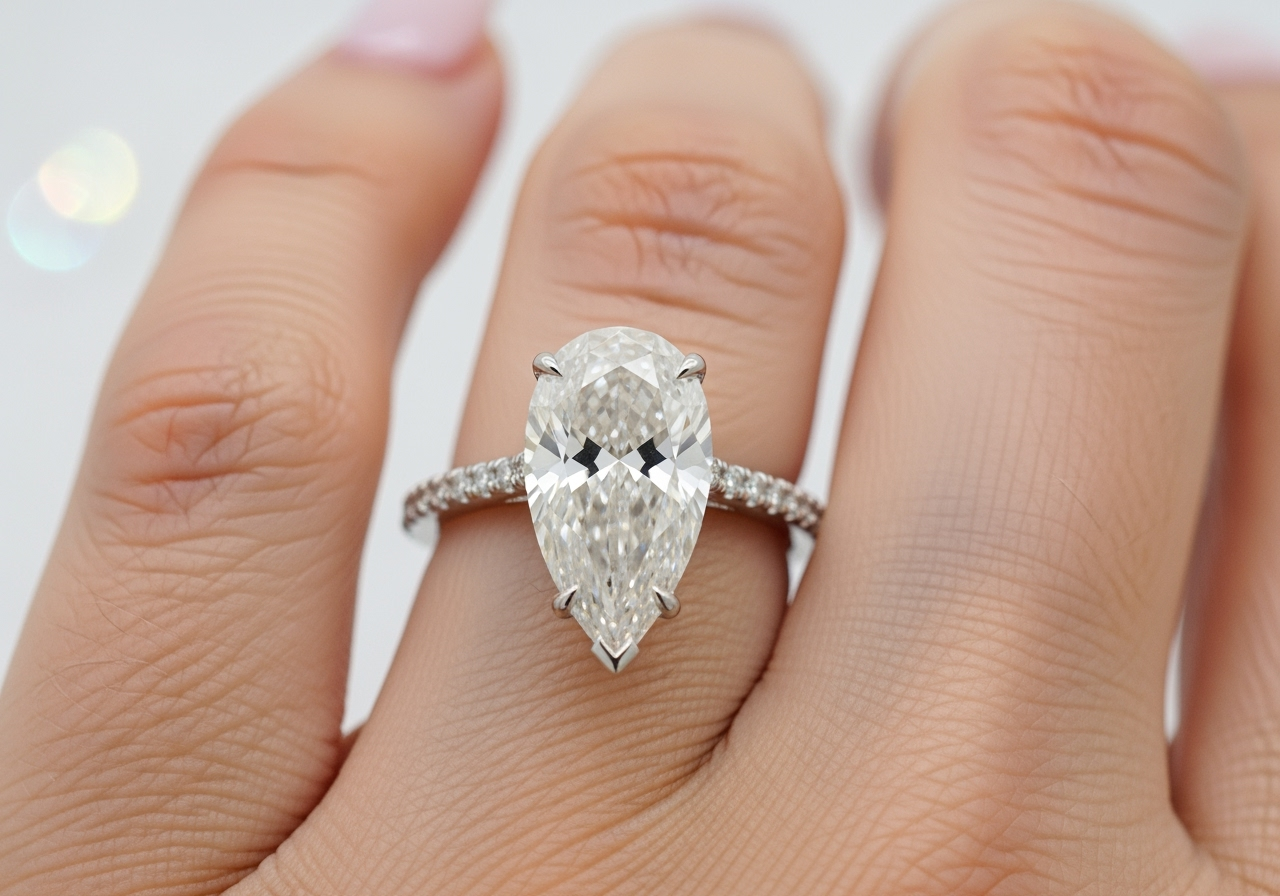
One of the most celebrated advantages of the pear shape is its incredible elongating effect on the finger, making your hand appear more slender and graceful. This flattering visual trick makes pear-shaped diamonds a popular choice not just for engagement rings, but also for earrings and pendants.
Choosing a pear shaped lab grown diamond is also a bold statement of individuality and style. Its asymmetrical yet balanced design sets it apart from more conventional cuts, allowing you to express a unique personal flair. It's for those who appreciate tradition but aren't afraid to stand out.
Beyond aesthetics, the pear shape carries beautiful symbolic meanings. It's often associated with elegance, emotional connection, and individuality. Some say its teardrop shape symbolizes "tears of joy," making it a deeply meaningful choice for significant life events. It represents grace and sophistication, embodying a desire for positive energy and renewal.
One of the most compelling advantages is the significant cost savings. Lab-grown diamonds are generally 30-50% less expensive than natural diamonds of comparable quality. This affordability means you can secure a larger, more impressive diamond for your budget without compromising on brilliance or durability.
Furthermore, selecting a lab-grown diamond is an inherently ethical and sustainable choice. Created in controlled laboratory environments, they have a significantly reduced environmental impact compared to traditional mining. They alleviate ethical concerns associated with certain mining practices, offering a conflict-free and eco-friendly alternative that aligns with modern values.
For a deeper dive into how lab-grown diamonds compare to their natural counterparts, we encourage you to read our comprehensive guide: Lab Diamonds vs Real Diamonds. And if you're curious about how this beautiful shape fits into broader trends, explore our insights on Engagement Ring Trends.
A Buyer's Guide to Quality: The 4Cs of Pear Diamonds
When selecting a pear shaped lab grown diamond, we emphasize the importance of the "4Cs": Cut, Color, Clarity, and Carat Weight. These are the universal standard for evaluating a diamond's quality. For a unique shape like the pear, understanding how each C plays a role is crucial to finding an exceptional stone.
Cut: The Key to Brilliance
For a pear shaped lab grown diamond, cut is paramount. It determines how the stone interacts with light, influencing its brilliance, fire, and sparkle. A well-cut pear will dance with light.
Unlike round diamonds, pear shapes don’t have a standardized cut grade from labs like GIA or IGI. This means we rely on proportions, symmetry, and polish to assess their cut quality. Here's what to look for:
- Symmetry: This is vital for a pear shape. Look for a balanced outline where the pointed end aligns with the rounded end, and the "shoulders" and "wings" (the rounded sides) are symmetrical. Poor symmetry can lead to an uneven appearance.
- Length-to-Width Ratio: This ratio defines the diamond's silhouette. While personal preference is key, a classic pear shaped lab grown diamond typically has a length-to-width ratio of 1.45 to 1.75. Ratios outside this range might look too short or too long for some tastes.
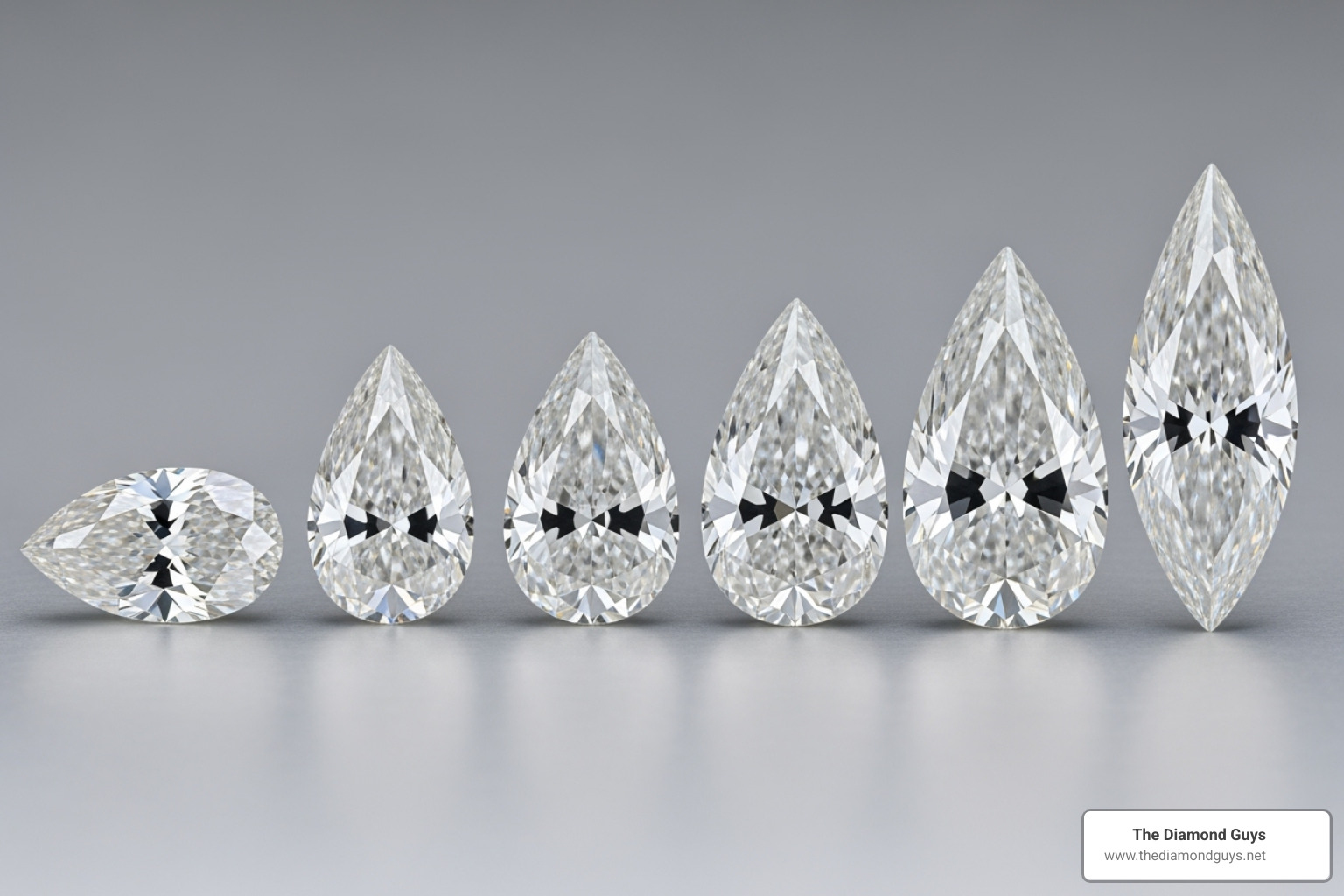
- Bow-Tie Effect: Pear diamonds can exhibit a "bow-tie"—a dark, bow-tie shaped area across the center. While a slight bow-tie is common, a prominent one can detract from the diamond's brilliance. A skilled cut minimizes this effect.
- Polish and Finish: These refer to the smoothness of the diamond's surface. Excellent polish and symmetry ensure light can enter and exit the diamond without obstruction, maximizing its sparkle. We prioritize diamonds with excellent or very good ratings in these areas.
Prioritizing an excellent cut is the best way to ensure your pear shaped lab grown diamond has maximum brilliance and fire.
Color: Finding the Perfect Hue
Diamond color is graded on a scale from D (colorless) to Z (light yellow or brown). For a pear shaped lab grown diamond, this is important because the pointed tip can sometimes concentrate color.
While D-F grades are colorless, we often recommend a near-colorless diamond in the G-I range. These diamonds appear colorless to the naked eye, especially in white gold or platinum, but offer a significant value advantage. This allows you to allocate more of your budget towards cut or carat weight.
The metal of your setting can also influence the perceived color. A yellow or rose gold setting can complement a warmer diamond, while a white gold or platinum setting will highlight its lack of color.
To dive deeper into the nuances of diamond color, explore our detailed guide: What is Diamond Color.
Clarity: Assessing Imperfections
Diamond clarity evaluates the presence of internal characteristics (inclusions) and external characteristics (blemishes). The scale runs from FL (Flawless) to I3 (Included).
For a pear shaped lab grown diamond, we recommend a clarity grade of VS2 (Very Slightly Included) or better. At this level, inclusions are typically microscopic and not visible to the naked eye, ensuring your diamond appears "eye-clean." This offers great beauty without the premium price of higher clarity grades.
Due to the pear shape's faceting, some minor inclusions might be less noticeable, particularly near the pointed tip. However, larger inclusions in the table area (the top flat surface) could impact brilliance. We can help you find an eye-clean stone that offers the best combination of beauty and value.
To learn more about diamond clarity, check out our guide: What Diamond Clarity Is Best.
Carat Weight: Maximizing Size and Value
Carat measures a diamond's weight. A significant advantage of the pear shaped lab grown diamond is that it tends to look larger than other shapes of the same carat weight due to its elongated form. This allows you to achieve a more substantial look for your budget.
Be mindful that diamond prices can jump at key carat weight thresholds (e.g., 1.00 ct, 2.00 ct). A 0.98-carat diamond can be considerably less expensive than a 1.00-carat diamond while looking nearly identical. It's wise to balance carat weight with the other 3Cs, as a smaller, well-cut diamond with excellent color and clarity can often outshine a larger stone of lower quality.
To illustrate the visual size advantage, here's how a 1-carat pear compares to a 1-carat round diamond:
| Diamond Shape | Approx. Diameter/Length x Width (mm) for 1 Carat | Perceived Size Advantage |
|---|---|---|
| Pear | 8.0 x 5.0 mm | Appears larger due to elongated shape |
| Round | 6.5 mm | Standard reference point |
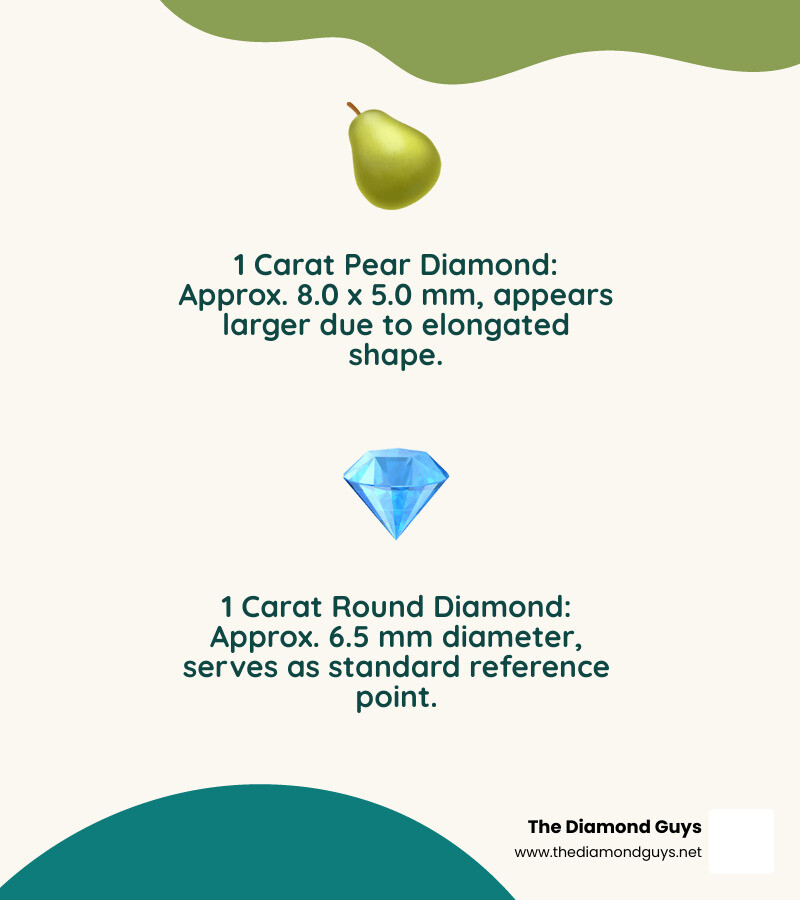
This visual difference is one of the many reasons the pear shaped lab grown diamond is a popular choice for maximizing sparkle per dollar.
Styling and Setting Your Pear Shaped Lab Grown Diamond
The unique silhouette of a pear shaped lab grown diamond offers incredible versatility in jewelry design. Its distinctive form can be celebrated in a variety of settings, each highlighting its beauty in a different way. However, selecting the right setting is crucial not only for aesthetics but also for protecting its vulnerable pointed tip.
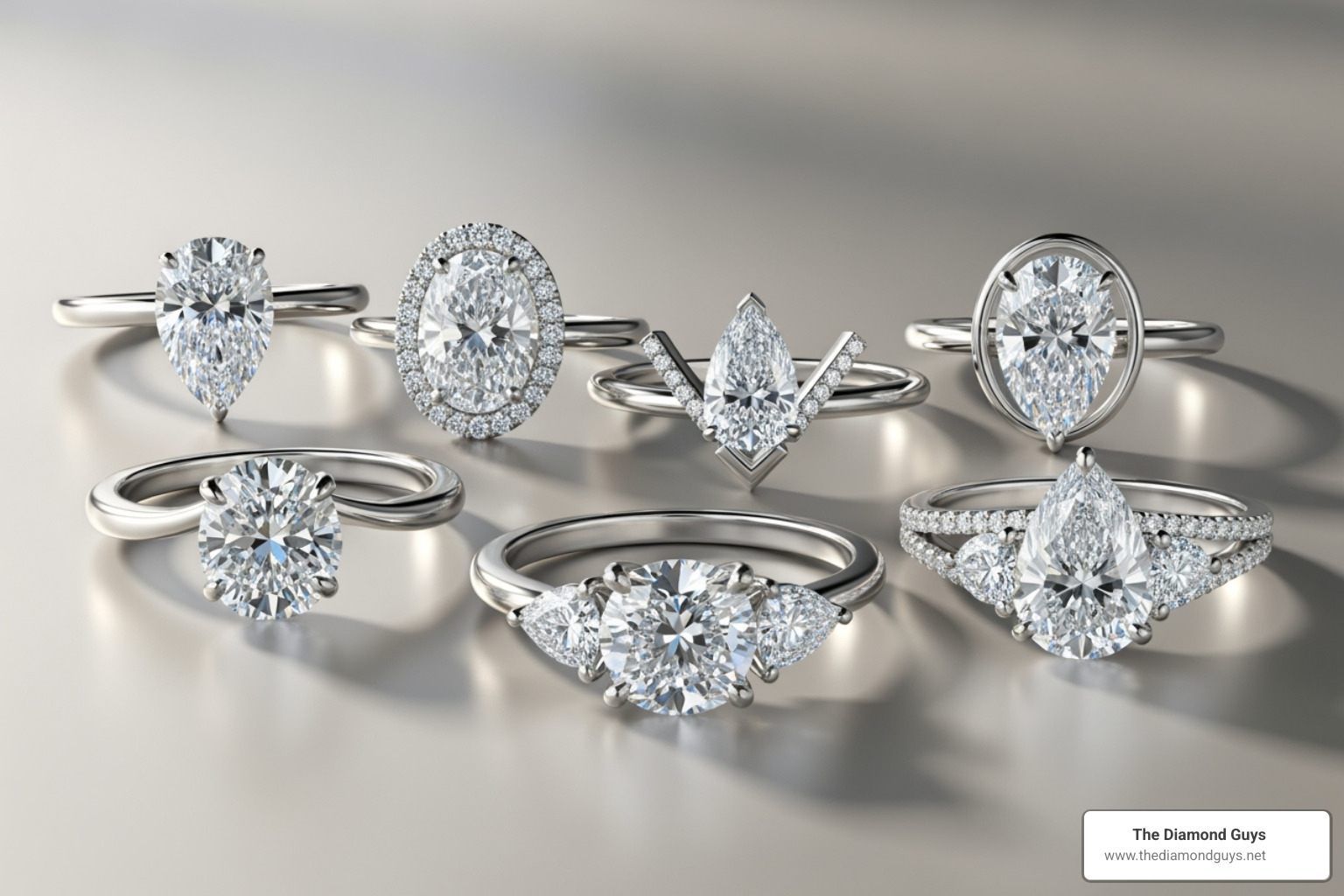
Best Engagement Ring Settings for a pear shaped lab grown diamond
The right setting will showcase your pear diamond's elegance while protecting its pointed tip. Here are some of the best options:
- Solitaire Setting: A timeless classic, the solitaire setting allows the pear shaped lab grown diamond to be the undisputed star. A single diamond on a plain band fully accentuates its unique shape and sparkle.
- Halo Setting: For extra sparkle, a halo of smaller diamonds encircles the central pear, making it appear significantly larger and enhancing its brilliance. This setting creates a magnificent, eye-catching effect.
- Bezel Setting: A thin metal rim fully encircles the pear shaped lab grown diamond, offering maximum security for its vulnerable tip. This sleek, modern look is ideal for active lifestyles.
- Prong Setting (with V-Prong): For a pear shaped lab grown diamond, a V-shaped prong is essential to protect the delicate pointed tip from chipping, while still allowing maximum light to enter the diamond for brilliant sparkle.
- East-West Setting: For a modern twist, setting the pear shaped lab grown diamond horizontally across the finger ("east-west") offers a unique, contemporary look that makes a bold statement.
- Three-Stone Setting: Flanking the central pear shaped lab grown diamond with two complementary side stones (like smaller pears or baguettes) creates a symbolic piece representing the past, present, and future.
- Split Shank Setting: In this striking option, the band divides as it approaches the center stone, creating a design that draws attention to the beautiful pear diamond.
The best setting is one that resonates with your personal style and provides adequate protection for your diamond. We're here to help you explore all these options and more.
How to Choose a Diamond Ring Setting
Caring for Your Pear Diamond Jewelry
Proper care is key to maintaining your pear shaped lab grown diamond's breathtaking sparkle for years to come.
- Regular Cleaning: Clean regularly with mild soap, warm water, and a soft toothbrush to remove dirt and oils. Rinse and dry with a lint-free cloth to maintain its sparkle.
- Professional Inspections: Have a professional jeweler inspect the setting and prongs every 6-12 months to ensure the stone, especially the pointed tip, remains secure.
- Protecting the Vulnerable Tip: The pointed tip of a pear shaped lab grown diamond is delicate and prone to chipping. A protective V-prong is crucial. Be mindful when wearing your ring during activities like sports or heavy lifting.
- Storing Safely: Store your jewelry in a fabric-lined box or soft pouch to prevent scratches and keep it clean.
By following these simple care guidelines, your pear shaped lab grown diamond will continue to radiate its exceptional beauty.
Frequently Asked Questions about Pear Shaped Lab Grown Diamonds
We understand that choosing a diamond, especially a pear shaped lab grown diamond, comes with many questions. Here, we address some of the most common concerns to provide clarity and confidence in your decision.
Are lab-grown pear diamonds a good investment?
This is an important question to address with realistic expectations. In the traditional sense of financial appreciation, lab-grown diamonds do not behave like natural diamonds, which have historically held value due to rarity. As a manufactured product with an increasing supply, the prices of lab-grown diamonds tend to decrease over time as technology improves.
Therefore, we don't recommend purchasing a pear shaped lab grown diamond as a financial investment. Instead, view it as an investment in sentimental value and personal expression. The true value of an engagement ring lies in the emotions it represents.
The significant affordability advantage of lab-grown diamonds (typically 30-50% less than natural diamonds) allows you to acquire a larger, higher-quality diamond for your budget, maximizing its visual impact and immediate enjoyment. Furthermore, a lab-grown diamond can be insured just like its natural counterpart, protecting your cherished possession against loss, theft, or damage.
Can You Insure a Lab-Grown Diamond
Can a jeweler tell the difference between a natural and a lab-grown pear diamond?
To the naked eye, a pear shaped lab grown diamond is identical to a natural pear diamond. They share the exact same chemical, physical, and optical properties, meaning they sparkle in the same breathtaking way.
A professional jeweler or trained gemologist can tell the difference, but it requires specialized equipment. This equipment detects subtle differences in growth patterns or trace elements that indicate their origin. For instance, some lab-grown diamonds have unique characteristics not present in natural diamonds.
To ensure transparency, reputable sellers often laser-inscribe lab-grown diamonds with a serial number and the words "lab-grown" or "LG" on their girdle. This inscription is microscopic but allows jewelers to easily identify the diamond's origin under magnification.
Most pear shaped lab grown diamonds come with a grading certificate from independent gemological laboratories such as IGI (International Gemological Institute) or GIA (Gemological Institute of America). These certificates provide comprehensive details about the diamond's 4Cs and confirm its lab-grown origin, validating its quality and authenticity.
Can a Jeweler Tell the Difference Between Lab-Grown Diamonds
How much does a 1 carat pear shaped lab grown diamond cost?
The cost of a 1 carat pear shaped lab grown diamond is influenced by the 4Cs: Cut, Color, Clarity, and Carat weight. There isn't a single price, as each diamond's unique combination of qualities determines its value.
- Cut: A superior cut, which maximizes brilliance, will command a higher price.
- Color: Diamonds closer to colorless (D-F) will be more expensive than those with slight tints (G-I or lower).
- Clarity: Flawless or nearly flawless diamonds are pricier than those with minor inclusions.
- Carat Weight: Prices can jump at popular carat weights, so a 0.98 ct stone may offer better value than a 1.00 ct stone of similar quality.
Compared to a natural 1 carat pear diamond, a lab-grown alternative offers substantial savings, often 30-50% less. This means you can acquire a larger or higher-quality diamond within your budget. We work closely with our clients to find the perfect balance of these factors to meet their aesthetic preferences and budget.
Conclusion: Is a Pear Shaped Lab Grown Diamond Right for You?
The pear shaped lab grown diamond is a remarkable choice for those seeking a diamond that combines elegance, individuality, and conscious consumerism. Its distinctive teardrop shape offers a unique aesthetic, creating an elongating effect on the finger and exuding timeless sophistication. It's a shape that allows for personal expression, symbolizing tears of joy and strong emotional connection.
Beyond its captivating beauty, the advantages of choosing a lab-grown diamond are compelling. You receive a stone that is chemically, physically, and optically identical to its mined counterpart, but at a significantly lower cost—often 30-50% less. This affordability means you can achieve a larger carat weight or a higher quality stone within your budget. Moreover, by opting for a lab-grown diamond, you are making an ethical and sustainable choice.
Whether you're drawn to its unique silhouette, its ethical origins, or its exceptional value, a pear shaped lab grown diamond offers a compelling package. It's a choice that reflects modern values without compromising on the timeless beauty and brilliance that diamonds are cherished for.
At The Diamond Guys, we offer expert guidance and a personalized shopping experience. With locations in Scottsdale, AZ, Sherman Oaks, CA, and Los Angeles, CA, we serve all of Arizona and California. We can help you steer the 4Cs, explore setting options, and find the perfect pear shaped lab grown diamond for your style and budget. Our commitment to ethical sourcing and quality ensures you'll receive a diamond to cherish for a lifetime.
Ready to find your perfect pear shaped lab grown diamond? We invite you to explore our collection and experience the difference that expert guidance makes.
Learn more about the differences between lab and real diamonds


