

Unveiling the Brilliance: A Guide to 1 and 3 Carat Lab Grown Diamonds
Introduction: The Modern Choice for Timeless Sparkle
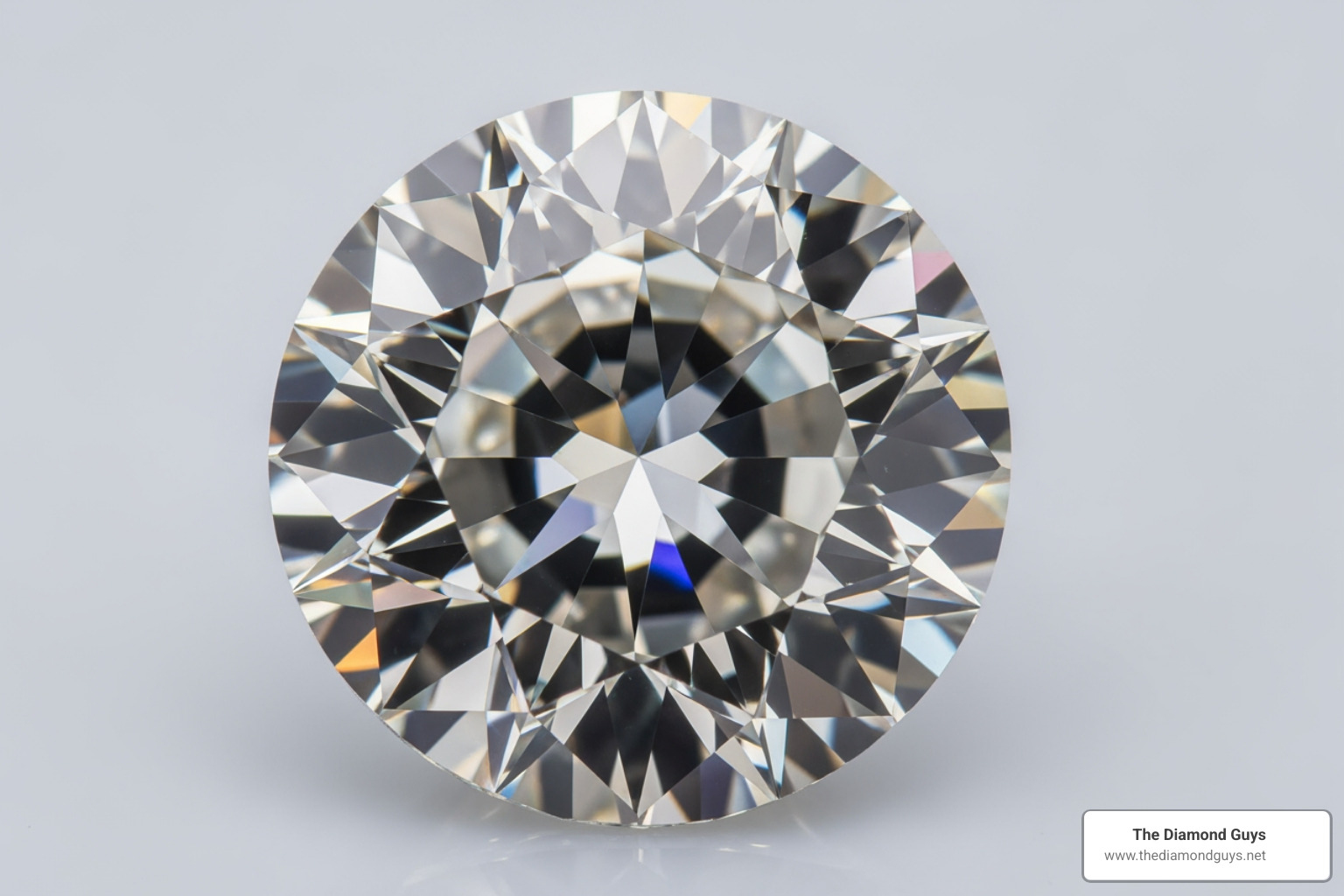
A 1 carat man made diamond offers the same brilliance and fire as a natural diamond, but at 30-50% less cost. These lab-grown diamonds are chemically, physically, and optically identical to earth-mined stones—the only difference is their origin.
Quick Facts About 1 Carat Man Made Diamonds:
- Real diamonds - Same chemical makeup as natural diamonds (pure carbon)
- Price range - Typically $800-$2,000 depending on cut, color, and clarity
- Size advantage - You can get a larger stone for the same budget as natural
- Certification - Graded by IGI or GIA using the same standards
- Durability - Last forever, just like natural diamonds
- Ethical choice - Conflict-free with lower environmental impact
Lab-grown diamonds are created in weeks using advanced technology. The two main methods are HPHT (High Pressure High Temperature) and CVD (Chemical Vapor Deposition). Both replicate the conditions that form natural diamonds deep in the earth.
You cannot tell the difference between a lab-grown and natural diamond with the naked eye. Even trained gemologists need specialized equipment to identify them. That's why reputable retailers inscribe lab-grown diamonds with laser markings for easy identification.
The rise of lab-grown diamonds has made it possible for couples to choose larger, higher-quality stones without stretching their budget. A 1 carat lab-grown diamond with excellent cut, near-colorless grade, and eye-clean clarity delivers maximum sparkle at a fraction of the cost.
When shopping for your diamond, focus on the 4Cs: cut (most important for sparkle), color (G-H offers great value), clarity (VS2 or better is eye-clean), and carat weight. The setting and metal choice also play a major role in how your diamond looks and wears over time.
I'm Morgan Price, and I've spent years helping couples steer the 1 carat man made diamond market to find stones that match their values and budget. Through my work connecting buyers with ethical, high-quality lab-grown diamonds, I've seen how these stones deliver both beauty and peace of mind. Let's explore everything you need to know to make a confident choice.
The Science and Substance: How Lab Diamonds Compare to Natural
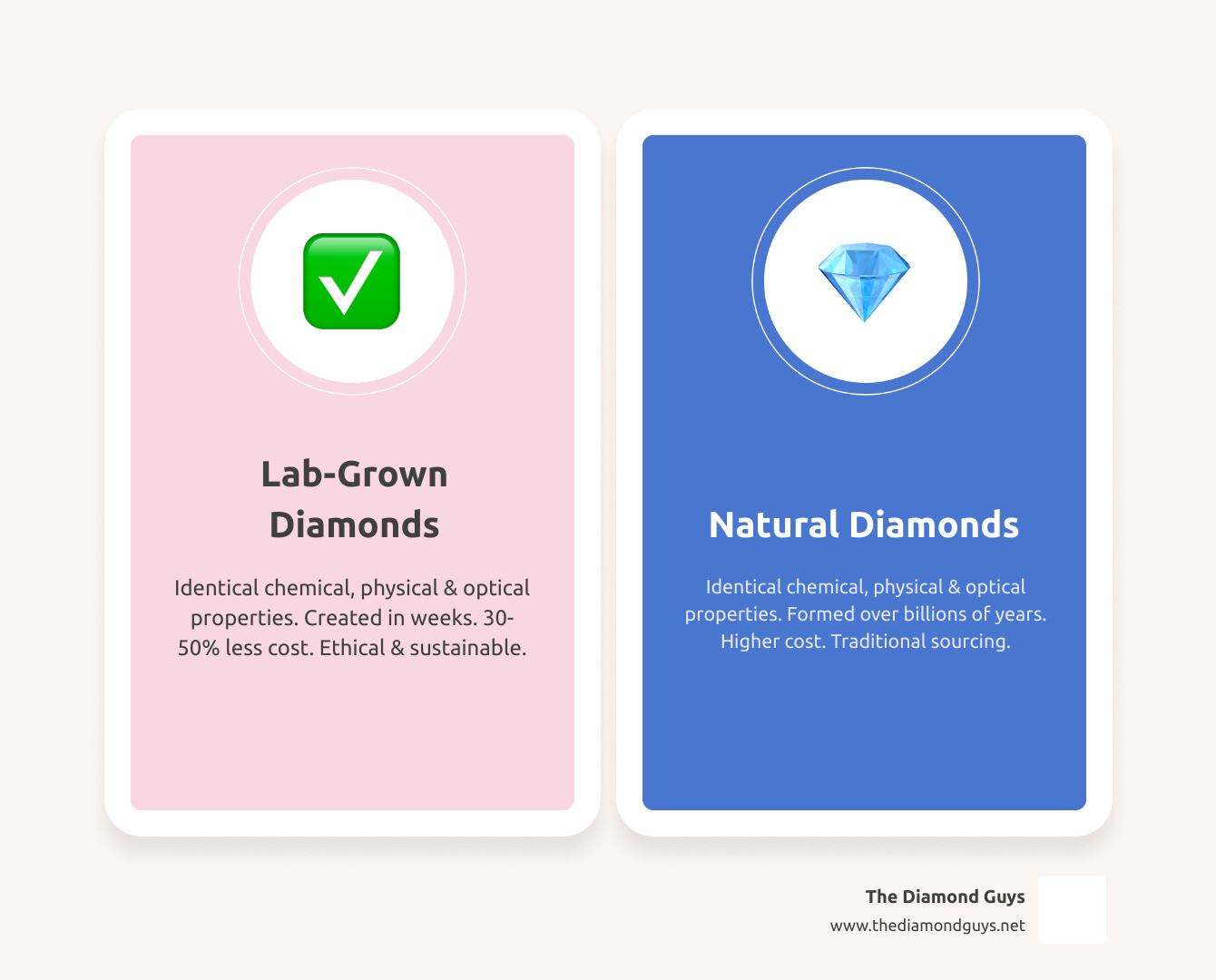
When we talk about a 1 carat man made diamond, we're not talking about a diamond simulant like cubic zirconia or moissanite. We're talking about a genuine diamond, with the exact same chemical, physical, and optical properties as a natural diamond. The only real distinction lies in their origin: one is grown in the earth over billions of years, and the other is grown in a controlled laboratory environment in a matter of weeks.
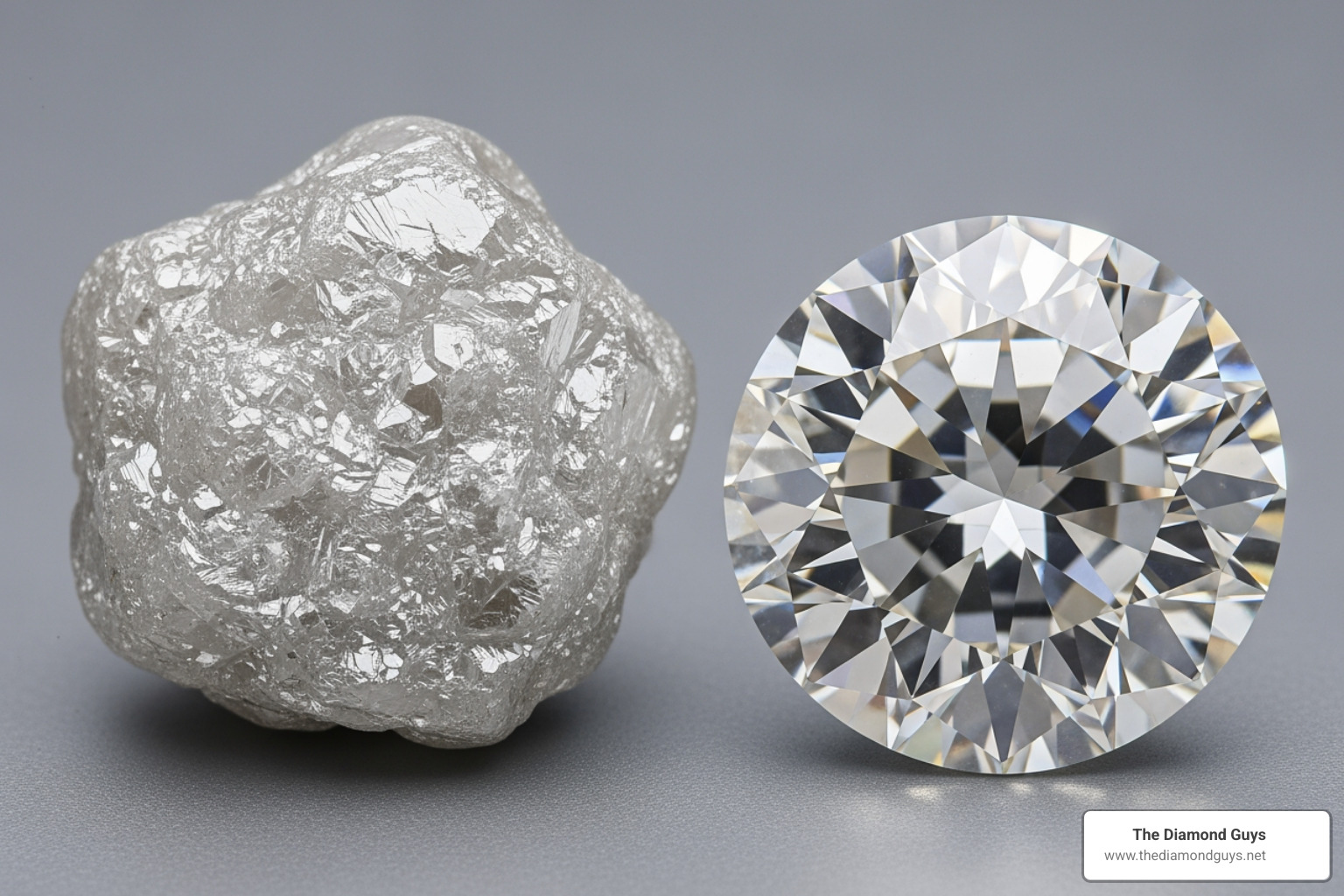
How do we create these marvels? There are two primary methods for growing lab diamonds:
- High-Pressure/High-Temperature (HPHT): This method mimics the earth's natural diamond-growing conditions. A small diamond seed is placed in a growth chamber with carbon and subjected to immense pressure (around 70,000 atmospheres) and high temperatures (over 2,500°F). The carbon then dissolves and crystallizes around the seed, forming a new diamond.
- Chemical Vapor Deposition (CVD): In this process, a diamond seed is placed in a vacuum chamber. Carbon-rich gases (like methane) are introduced and heated to high temperatures, causing the carbon atoms to separate and "rain down" onto the seed, slowly building up layers of diamond. Some CVD diamonds might undergo HPHT improvement afterward to improve their color or clarity.
Both methods result in diamonds that are chemically identical to natural diamonds—pure carbon in a cubic crystal structure. This means they possess the same incredible hardness (10 on the Mohs scale), durability, and dazzling optical characteristics that make diamonds so beloved. They are just as strong as their earth-mined counterparts, meaning a lab-grown diamond is perfectly capable of withstanding daily wear and tear for a lifetime and beyond. You can confidently know that lab diamonds are as strong as real diamonds.
Lab vs. Natural: Quality and Appearance
Here's the fun part: because lab-grown diamonds share the same fundamental properties as natural diamonds, they look, sparkle, and wear identically. To the naked eye, you simply cannot tell the difference. They exhibit the same fire (the dispersion of light into rainbow colors) and brilliance (the reflection of white light) that we adore in natural diamonds.
Even a seasoned jeweler, without specialized equipment, cannot distinguish a lab-grown diamond from a natural one. This is why tools like the GIA iD100 are needed to look for luminescence signatures unique to natural diamonds or to detect the trace amounts of nitrogen present in most natural diamonds but absent in lab-grown ones. Rest assured, lab diamonds pass a diamond tester because they are real diamonds.
Both types of diamonds are graded using the same universally accepted 4Cs (Carat, Cut, Color, Clarity) by reputable gemological laboratories like IGI and GIA. This means a 1 carat lab-grown diamond with a G color and VS2 clarity will have the same visual characteristics as a natural 1 carat diamond with the same grades.
Inclusions—the internal characteristics of a diamond—can be present in both natural and lab-grown diamonds. The clarity grade reflects the number, size, and position of these inclusions. Some lab-grown diamonds, particularly those grown by CVD, are often Type IIa diamonds, a rare and highly prized classification in natural diamonds known for their exceptional purity and brilliance.
Understanding the Price of a 1 Carat Man Made Diamond
Now, let's talk numbers, because this is where lab-grown diamonds truly shine for many of our clients. A 1 carat man made diamond is significantly more affordable than a natural diamond of comparable quality. We're talking about a difference of 30-50%, sometimes even more. This price difference allows our clients in Scottsdale, Los Angeles, and Sherman Oaks to get a larger, higher-quality diamond for their budget without compromising on beauty or durability.
Let's look at a hypothetical comparison for a 1 carat diamond with good quality (G color, VS2 clarity, Excellent cut):
| Diamond Type | Carat Weight | Color | Clarity | Cut | Estimated Price Range |
|---|---|---|---|---|---|
| Natural | 1.00 ct | G | VS2 | Excellent | $4,000 - $7,000+ |
| Lab-Grown | 1.00 ct | G | VS2 | Excellent | $1,200 - $2,500 |
Note: Prices are illustrative and can vary based on market conditions, specific grades, and retailer.
The reason for this price disparity isn't a difference in quality, but rather in supply and demand. Natural diamonds are finite resources, requiring extensive mining operations. Lab-grown diamonds, while requiring significant investment in technology and expertise, can be produced more consistently and efficiently, bypassing the complex and often opaque natural diamond supply chain.
While lab-grown diamonds are a fantastic value, their resale value currently differs from natural diamonds. Because they are newer to the market and production methods are continually improving, prices tend to decrease over time. However, we believe that the sentimental value of a diamond, especially an engagement ring, far outweighs its potential resale value. Our goal is to help you afford your dream engagement ring that will be cherished for a lifetime, regardless of market fluctuations.
Your Guide to Choosing the Perfect 1 Carat Man Made Diamond
Choosing a 1 carat man made diamond is an exciting journey, and we're here to guide you every step of the way. Just like with natural diamonds, the key to finding your perfect stone lies in understanding the 4Cs: Carat, Cut, Color, and Clarity. For a 1 carat diamond, these factors play a crucial role in its overall appearance and sparkle.
When our clients visit us in Arizona or California, we walk them through how each of these elements contributes to the diamond's beauty. A 1 carat diamond is a popular and classic choice, offering a noticeable presence on the hand without being overwhelming. To truly understand its visual impact, it's helpful to know what diamond carat size truly means beyond just weight.
Mastering the 4Cs for Your 1 Carat Diamond
- Carat: This refers to the diamond's weight, not its size. A 1 carat diamond weighs 200 milligrams. However, the actual visual size can vary slightly depending on the diamond's shape and how it's cut.
- Cut: We cannot stress this enough: Cut is king! For any diamond, especially a 1 carat stone, the cut quality is the most critical factor determining its sparkle, brilliance, and fire. An excellently cut diamond will reflect light optimally, maximizing its visual appeal. Even a flawless diamond will appear dull if it has a poor cut. We always recommend prioritizing an "Excellent" or "Ideal" cut grade. You'll often see "Super Ideal" cuts mentioned, which signifies an even higher standard of precision and light performance.
- Color: This refers to the absence of color in a diamond, graded on a scale from D (colorless) to Z (light yellow or brown). For a 1 carat diamond, we often advise our clients to look for a near-colorless grade (G, H, or I). These diamonds appear colorless to the naked eye, especially when set, but come at a more accessible price point than D-F grades. If you're opting for a yellow or rose gold setting, a slightly warmer color (J, K) can even be complementary, as the metal's hue can balance out any faint yellow in the diamond.
- Clarity: This measures the presence of inclusions (internal flaws) and blemishes (external imperfections). The clarity scale ranges from Flawless (FL) to Included (I3). For a 1 carat diamond, we typically recommend aiming for an "eye-clean" diamond, meaning no inclusions are visible to the naked eye. This usually falls within the VS1 or VS2 range, and sometimes even SI1, depending on the type and location of the inclusion. There's no need to pay for Flawless clarity if you can't see the difference! We can help you determine what diamond clarity is best for your needs.
By focusing on an excellent cut, a near-colorless grade, and an eye-clean clarity, you can maximize your budget and get a stunning 1 carat man made diamond that will truly sparkle.
Popular Shapes for a 1 Carat Man Made Diamond Ring
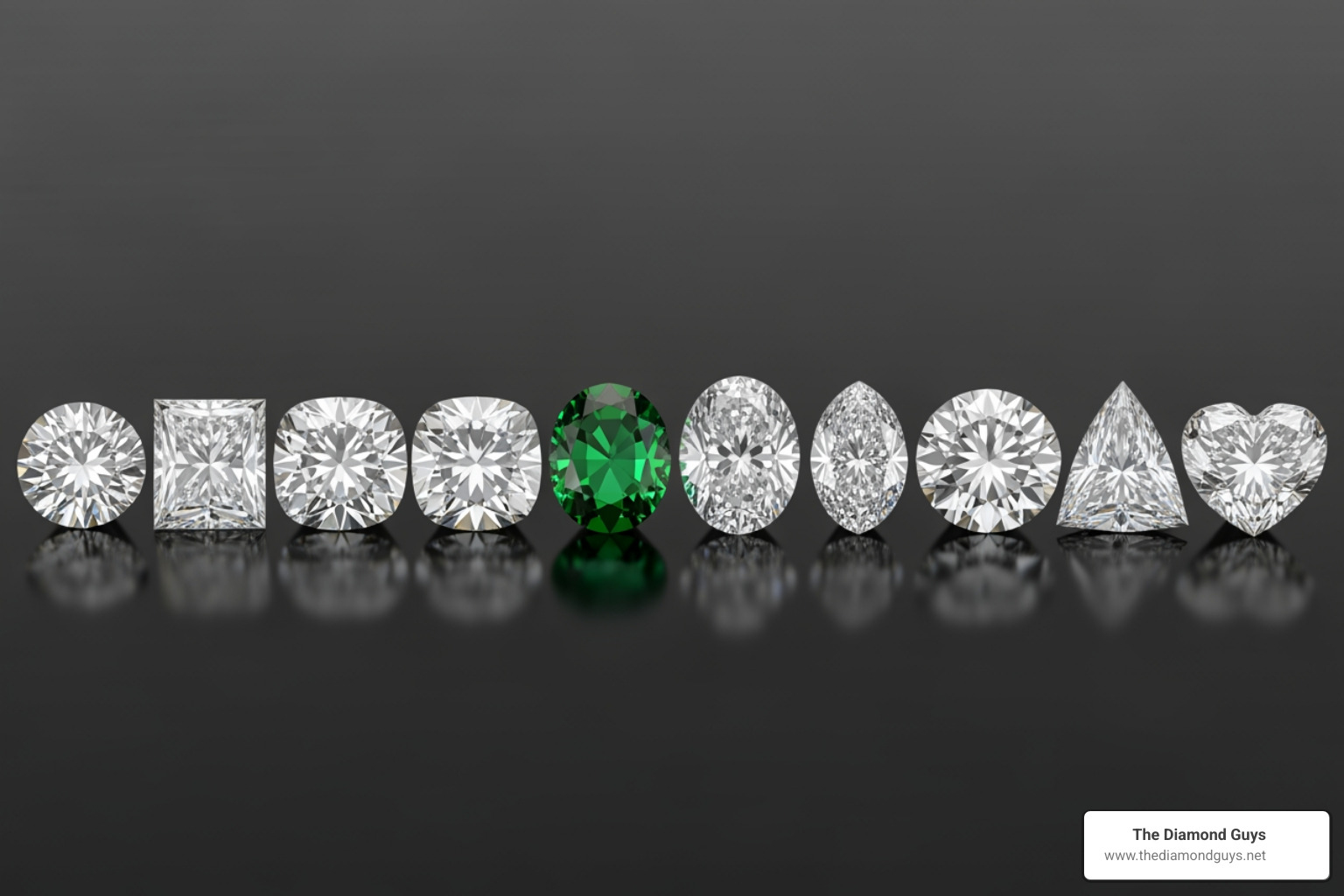
The shape of your 1 carat man made diamond is a personal choice that significantly impacts the ring's overall aesthetic. Here are some of the most popular shapes we see our clients choosing:
- Round Brilliant: The undisputed classic, known for its exceptional sparkle and timeless appeal. It's designed to maximize light return, making it incredibly brilliant.
- Oval: A sophisticated and neat choice that often appears larger than its carat weight due to its elongated shape. It offers a soft, modern look.
- Princess: A contemporary square shape with sharp, clean lines and brilliant facets, offering a modern alternative to the round brilliant. Learn more about princess perfect engagement ring styles.
- Emerald: A rectangular step-cut known for its neat, sophisticated hall-of-mirrors effect. It emphasizes clarity and showcases the diamond's pristine nature.
- Pear: A unique and graceful teardrop shape that combines the brilliance of a round with the elongated style of a marquise. Check out our pear-shaped lab-grown diamond guide.
- Cushion: A romantic shape with rounded corners and larger facets that provide a soft, pillow-like appearance and a beautiful sparkle.
Each shape has its own unique charm, and the best one for you is simply the one you love the most!
How Settings and Metals Improve Your Diamond
The setting and metal you choose for your 1 carat man made diamond ring are just as important as the diamond itself. They not only hold the diamond securely but also improve its appearance and contribute to the ring's overall style. We help clients in Los Angeles and Scottsdale select the perfect combination.
- Solitaire Setting: A timeless choice that highlights the beauty of a single diamond. It's clean, neat, and lets your 1 carat diamond be the star of the show.
- Halo Setting: Features a circle of smaller diamonds surrounding the center stone, making the 1 carat diamond appear larger and adding extra sparkle. This is a fantastic way to maximize visual impact.
- Pave Band: A band adorned with tiny diamonds set closely together, creating a continuous line of sparkle that complements the center stone.
- Three-Stone Setting: Symbolizing past, present, and future, this setting features a larger center diamond flanked by two smaller stones. This can be particularly stunning with a 1 carat center stone.
When it comes to metals, your choice can greatly influence the diamond's perceived color and the ring's overall warmth:
- Platinum: A naturally white and extremely durable metal, perfect for showcasing colorless or near-colorless diamonds.
- White Gold: A popular and affordable alternative to platinum, offering a similar bright, silvery-white appearance. It's often rhodium-plated to maintain its luster.
- Yellow Gold: A classic and warm metal that beautifully complements diamonds with a slightly warmer tint, or provides a striking contrast to colorless stones.
- Rose Gold: A romantic and trendy choice, its pinkish hue adds a unique warmth and vintage feel to any ring.
Choosing the right setting and metal is about finding a balance between aesthetics, durability, and personal preference. We can help you steer these choices to choose a diamond ring setting that perfectly complements your 1 carat man made diamond and your unique style. After all, gold and diamonds are a match made in jewelry heaven.
The Clear Advantages: Why Choose a Lab-Grown Diamond?
Choosing a 1 carat man made diamond isn't just a smart financial decision; it's a choice that aligns with modern values and offers numerous benefits beyond the sparkle. Our clients in Arizona and California appreciate the peace of mind that comes with selecting a lab-grown diamond.
One of the most immediate and impactful advantages is the cost savings. As we've discussed, you can acquire a significantly larger or higher-quality diamond for the same budget compared to a natural stone. This means that dream 1 carat (or even 3 carat!) diamond engagement ring is more attainable than ever. Why pay more for the exact same beauty and durability? This empowers you to truly afford your dream engagement ring without compromise.
Beyond the budget, there's a growing awareness of the ethical and environmental benefits of lab-grown diamonds. For many, this is a decisive factor.
Ethical and Environmental Peace of Mind
At The Diamond Guys, we understand that an engagement ring is a symbol of love and commitment, and increasingly, people want that symbol to reflect their values. Lab-grown diamonds offer:
- Conflict-Free Guarantee: Unlike some natural diamonds, lab-grown diamonds are guaranteed to be conflict-free. They are created in controlled environments, eliminating any concerns about funding conflicts or human rights abuses often associated with traditional diamond mining. This gives you absolute peace of mind that your beautiful 1 carat man made diamond comes with a clean conscience.
- Reduced Environmental Impact: Diamond mining can involve significant land disruption, habitat destruction, and considerable energy and water consumption. Lab-grown diamonds, while not without an environmental footprint, generally have a much smaller one. Production facilities are becoming increasingly efficient and often use renewable energy sources. This contributes to a reduced carbon footprint and less water usage compared to mining. Choosing a lab-grown diamond is a step towards a more sustainable future.
- Transparent Sourcing: The origin of a lab-grown diamond is always known, providing complete transparency in its journey from creation to your finger. This stands in contrast to the sometimes complex and difficult-to-trace supply chains of natural diamonds.
The decision to buy a lab-grown diamond engagement ring is a personal one. But for those who value both exquisite beauty and responsible choices, a 1 carat man made diamond offers an undeniable advantage.
Trust and Transparency: Certification and Finding a Reputable Retailer
When investing in a 1 carat man made diamond, trust and transparency are paramount. Just like natural diamonds, lab-grown diamonds should always come with a comprehensive grading report from an independent gemological laboratory. This report is your diamond's birth certificate and report card all rolled into one, detailing its unique characteristics and ensuring you know exactly what you're buying.
The most respected and widely recognized grading labs for lab-grown diamonds include:
- International Gemological Institute (IGI): IGI is a pioneer in grading lab-grown diamonds and is highly regarded for its thorough and consistent reports. Most lab-grown diamonds on the market today are IGI certified.
- Gemological Institute of America (GIA): GIA, the world's foremost authority in diamond grading, also grades lab-grown diamonds. Their reports are known for their strict standards and detailed analysis.
These reports use the same 4Cs grading scale as natural diamonds, ensuring a consistent standard of quality assessment. Additionally, reputable labs will laser inscribe the diamond's girdle with its report number and often the words "LAB GROWN" or "LG" to clearly identify its origin. This inscription is usually microscopic and not visible to the naked eye, but can be seen under magnification. This ensures complete transparency and helps jewelers distinguish between lab-grown and natural diamonds, as discussed in the introduction.
Finding a reputable retailer is equally important. At The Diamond Guys, whether you visit us in Scottsdale, Sherman Oaks, or Los Angeles, we pride ourselves on providing expert guidance and a personalized shopping experience. We believe in educating our clients so they can make informed decisions. We're here to help you steer the nuances of lab-grown diamonds and ensure you feel confident in your purchase. For a deeper dive, check out our guide on uncovering the best lab diamond ring retailers.
Decoding Your Diamond's Grading Report
Understanding your diamond's grading report is crucial. Here's what you'll find on a typical IGI or GIA lab-grown diamond report:
- Report Number: A unique identification number for your specific diamond, often laser-inscribed on the girdle.
- Shape and Cutting Style: Identifies the diamond's shape (e.g., Round Brilliant, Oval) and its facet arrangement.
- Measurements: The diamond's dimensions in millimeters.
- Carat Weight: The precise weight of the diamond, typically to two decimal places (e.g., 1.01 ct).
- Color Grade: The diamond's color grade (e.g., G, H, F).
- Clarity Grade: The diamond's clarity grade (e.g., VS1, VS2, VVS2).
- Cut Grade: For round brilliant diamonds, this grade (Excellent, Very Good, Good) assesses how well the diamond's proportions interact with light.
- Polish and Symmetry: Grades that indicate the quality of the diamond's surface finish and the precision of its facet alignment.
- Fluorescence: Describes how the diamond reacts to ultraviolet light. For lab-grown diamonds, this is typically "None."
- Growth Process: States whether the diamond was created using HPHT or CVD.
- Post-Growth Treatments: Any treatments applied to the diamond after its initial growth to improve its appearance.
This report is essential not just for verifying quality, but also for insurance purposes. Rest assured, you can insure a lab-grown diamond just like a natural one, protecting your investment.
Conclusion: Your Perfect Diamond Awaits
The journey to finding the perfect diamond is a deeply personal one, and a 1 carat man made diamond offers an incredible blend of beauty, value, and modern sensibility. We've explored how these scientifically advanced gems are chemically, physically, and optically identical to their natural counterparts, offering the same dazzling sparkle without the premium price tag or ethical concerns.
With lab-grown diamonds, you gain the freedom to choose a larger, higher-quality stone for your budget, ensuring your engagement ring truly stands out. You also benefit from the peace of mind that comes with a conflict-free and more environmentally responsible choice. Coupled with transparent certification from reputable labs like IGI and GIA, you can be absolutely confident in your purchase.
At The Diamond Guys, we're passionate about helping our clients craft their unique stories. Whether you're looking for a classic round brilliant, an neat oval, or a unique fancy shape, our expert team in Scottsdale, Sherman Oaks, and Los Angeles is ready to provide you with the personalized guidance you deserve. We'll help you steer the 4Cs, explore stunning settings, and even design your custom lab diamond ring that perfectly reflects your love story.
Ready to explore the brilliance of lab-grown diamonds for yourself? Let us help you find the perfect 1 carat man made diamond that will sparkle for a lifetime. Explore the differences between lab and real diamonds further, and then come visit us to experience the magic firsthand.


