

The Platinum Ring Resizing Handbook
Why Your Platinum Ring Deserves Expert Care
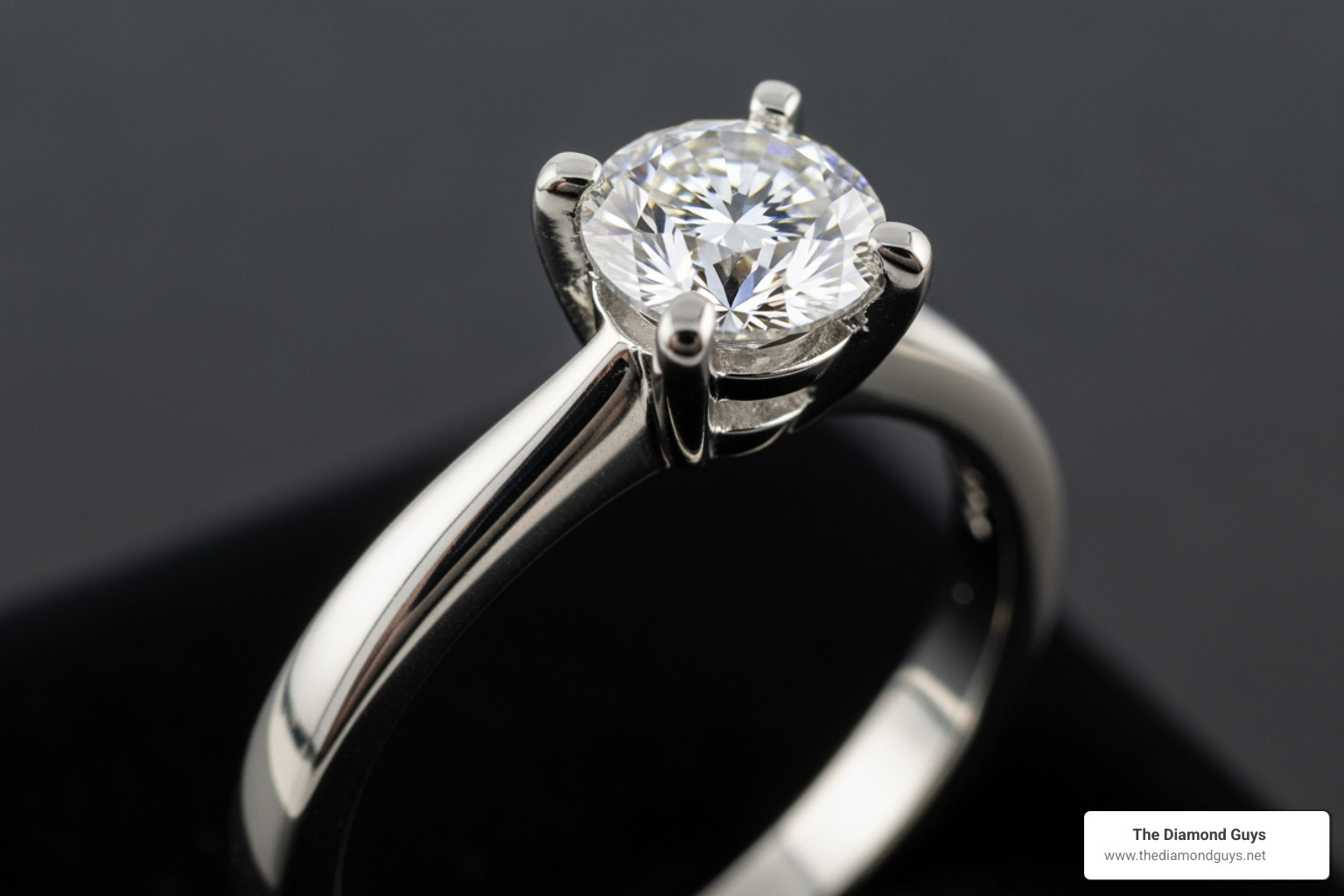
Platinum ring resizing is a specialized service that adjusts your ring's fit while preserving its integrity. Here's what you need to know:
Quick Facts:
- Cost Range: $75 - $400+ depending on complexity
- Time Required: Typically 1-2 weeks
- Size Limit: Usually up to 2 sizes larger or smaller
- Key Requirement: Must be done with laser welding for a seamless result
- Best For: Rings with simple bands or minimal stone settings
- Challenging: Eternity bands, full pavé designs, or tension settings
Your platinum ring is a symbol of enduring value, but life changes—weight fluctuations, pregnancy, or an incorrect initial sizing—can mean it no longer fits comfortably.
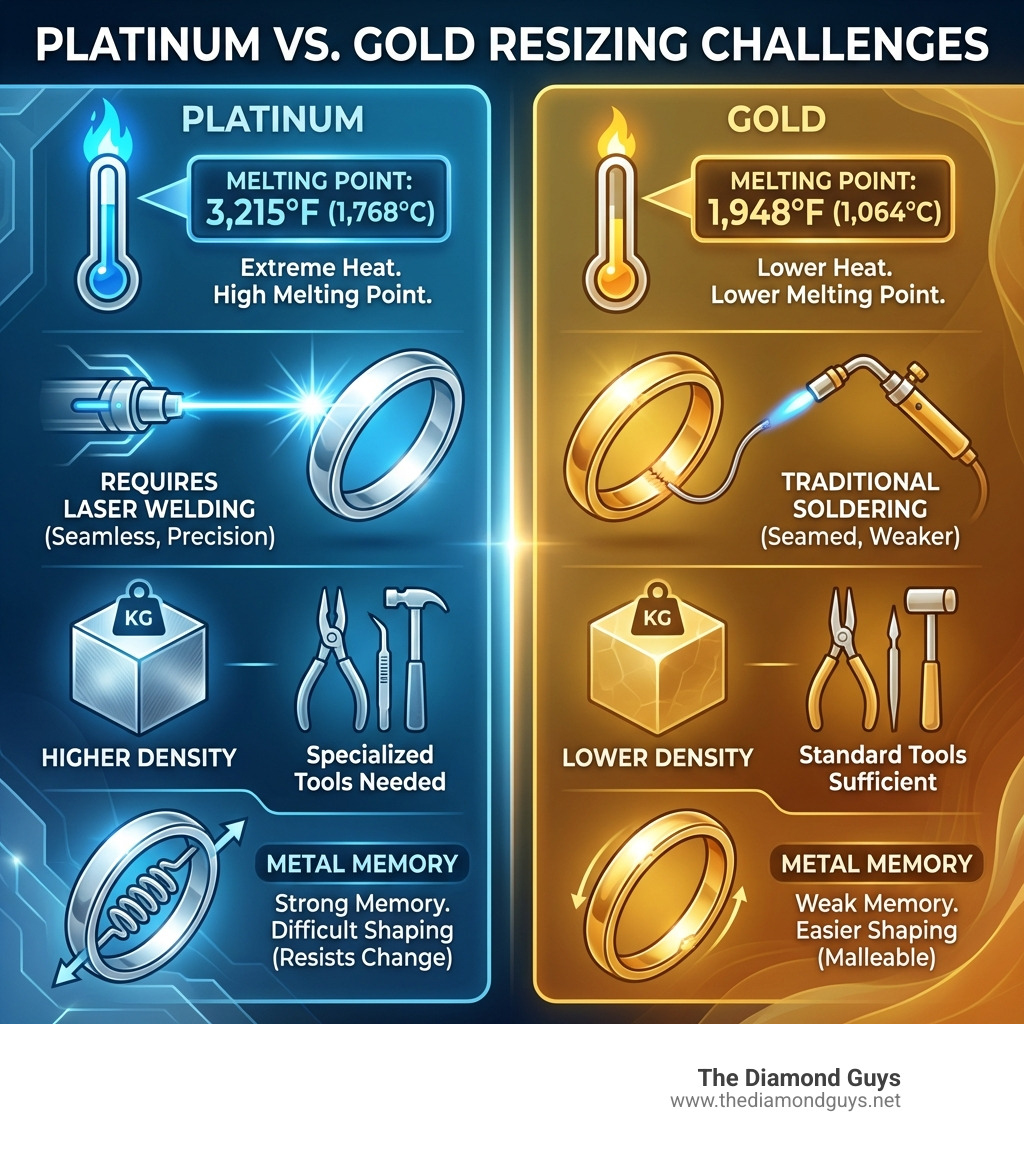
Unlike gold or silver, platinum is uniquely challenging to resize. Its high density, extreme melting point (3,215°F), and metal "memory" make it difficult to work with. Standard soldering often leaves visible seams or weakens the band. That's why platinum ring resizing demands a specialist with laser welding equipment who understands the metal's unique properties.
A poor resize can damage your ring's structure, loosen gems, or leave an unsightly seam, diminishing its value. When done correctly by a skilled artisan, however, your resized platinum ring will look and wear exactly as it did the day you first put it on.
Why Platinum Ring Resizing is a Specialist's Job
When adjusting your platinum ring, not just any jeweler can do the job right. Platinum's properties demand a specialist's touch, setting it apart from gold or silver. We’ve seen how crucial this expertise is in our Scottsdale and Los Angeles showrooms.
The Unique Challenges of Platinum
Working with platinum is like sculpting a material that is both incredibly dense and has a mind of its own. Here's why it's so different:
- Platinum Properties: Platinum is a rare metal prized for its purity (90-95% in jewelry), durability, and bright white luster that never fades. These same qualities make it notoriously difficult to work with during resizing.
- High Melting Point: At 3,215°F (1,768°C), platinum's melting point is far higher than gold's (1,948°F). A traditional jeweler's torch isn't hot enough to fuse platinum properly, leading to weak, discolored seams if foreign alloys are used as solder.
- Metal Memory: Platinum has a unique "memory," meaning it resists bending and tries to spring back to its original shape. This makes reshaping difficult without thinning the band or causing stress, requiring specialized techniques.
- Density and Strength: Because platinum is so dense and strong, it requires specialized tools and more effort to cut, shape, and polish compared to softer metals.
- Need for Specialized Tools: Beyond a laser welder, working with platinum requires specific files, pliers, and polishing compounds designed to handle its hardness and ensure a pristine finish.
- Risk of Contamination: Platinum's purity makes it susceptible to contamination from other metals. If a jeweler uses tools contaminated with gold, for example, particles can embed in the platinum, causing discoloration. Dedicated platinum workspaces are essential.
For these reasons, resizing a platinum ring is far more intricate than other metals. It demands a jeweler with the right skills and specialized equipment. For more general information, explore our guide on Can engagement rings be resized.
The Critical Role of Laser Welding
Given platinum's high melting point, laser welding isn't just an option—it's a necessity for a flawless platinum ring resizing.
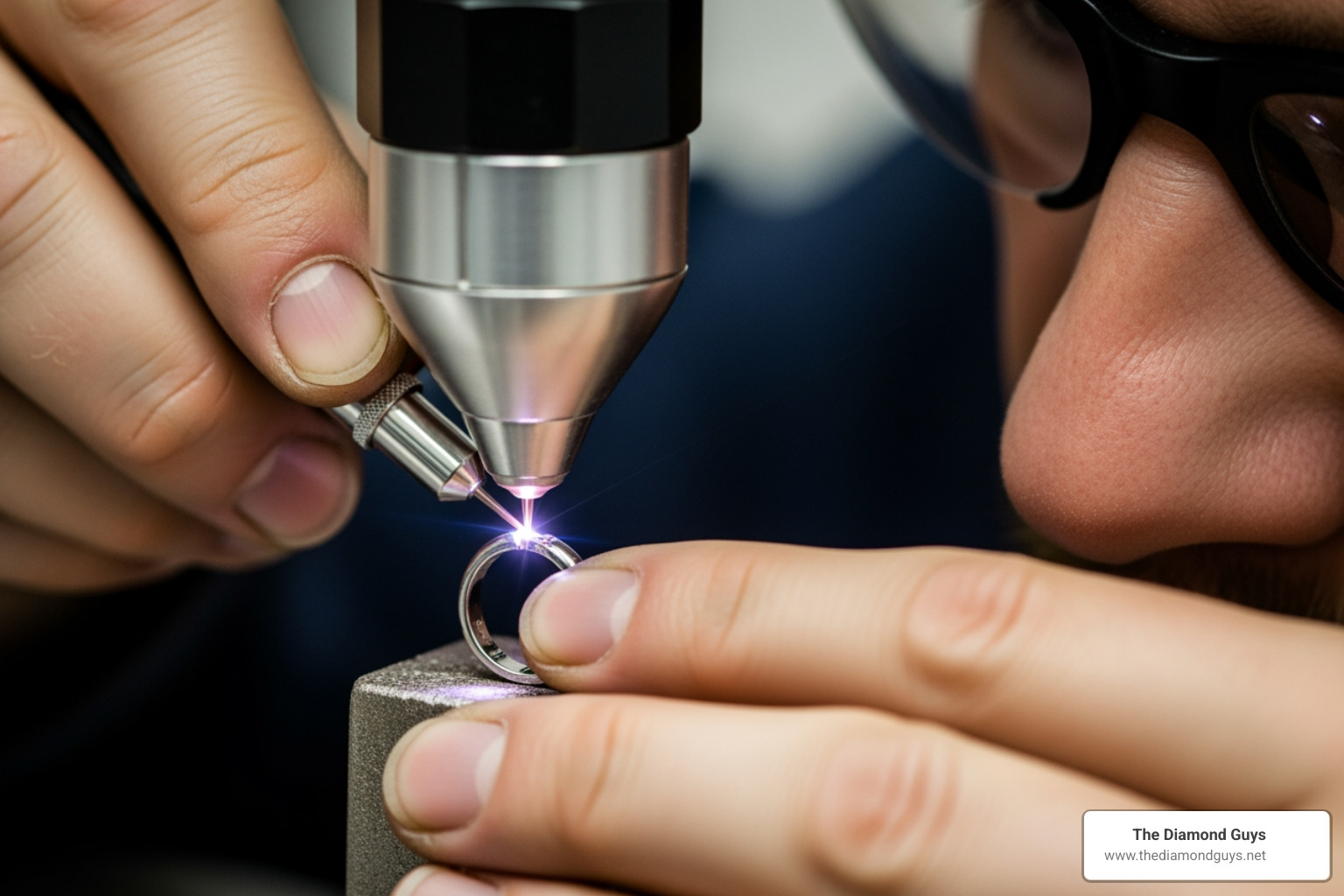
- Traditional Soldering vs. Laser Welding: Traditional soldering uses a torch and a filler metal (solder) to join pieces. For platinum, this often leaves a visible, weaker seam of a different color.
- Achieving a Seamless, Invisible Join: Laser welding uses a focused beam of light to melt the existing platinum, fusing it together. This creates a strong, homogeneous, and virtually invisible bond.
- Avoiding Discoloration: Since laser welding uses no foreign filler metals, it avoids any risk of discoloration, preserving platinum's brilliant white hue.
- Maintaining Metal Purity at the Seam: By fusing the original metal, laser welding preserves the high purity and integrity of the entire ring.
Resizing Platinum Rings with Gemstones
Gemstones add another layer of complexity to platinum ring resizing, requiring protection of the stone settings.
- Pave Settings: These settings, with small gems set close together, are delicate. Resizing can distort the metal and loosen stones. Laser welding helps minimize heat transfer to these areas.
- Channel Settings: When resizing, the metal walls of a channel setting can warp, loosening the stones. Careful reshaping and inspection are crucial.
- Tension Settings: These rings, where the gem is held by pressure, are often the most challenging and sometimes impossible to resize. Altering the band can compromise the tension holding the stone.
- Heat Sensitivity of Gems: While diamonds are hard, they can be damaged by the excessive heat of a traditional torch. Colored gems like emeralds are even more sensitive. Laser welding's localized heat significantly reduces this risk.
- Risk of Loosening Stones: Any alteration carries a risk of loosening stones. A skilled jeweler inspects all settings before and after resizing to ensure every gem is secure.
- Why Intricate Designs Require Master Jewelers: For complex rings, only a master jeweler with experience in platinum and laser welding should be trusted. Their expertise protects both the metal and your gems. If you're considering a custom design, our experts can guide you, as detailed in From sketch to sparkle: The journey of making a custom engagement ring.
The Resizing Process: A Step-by-Step Guide
Understanding the technical process behind platinum ring resizing helps you appreciate the skill involved. Whether making your ring smaller or larger, our master jewelers follow a meticulous process for a seamless result.
How Jewelers Make a Platinum Ring Smaller
Making a ring smaller involves removing a section of the band and rejoining the ends.
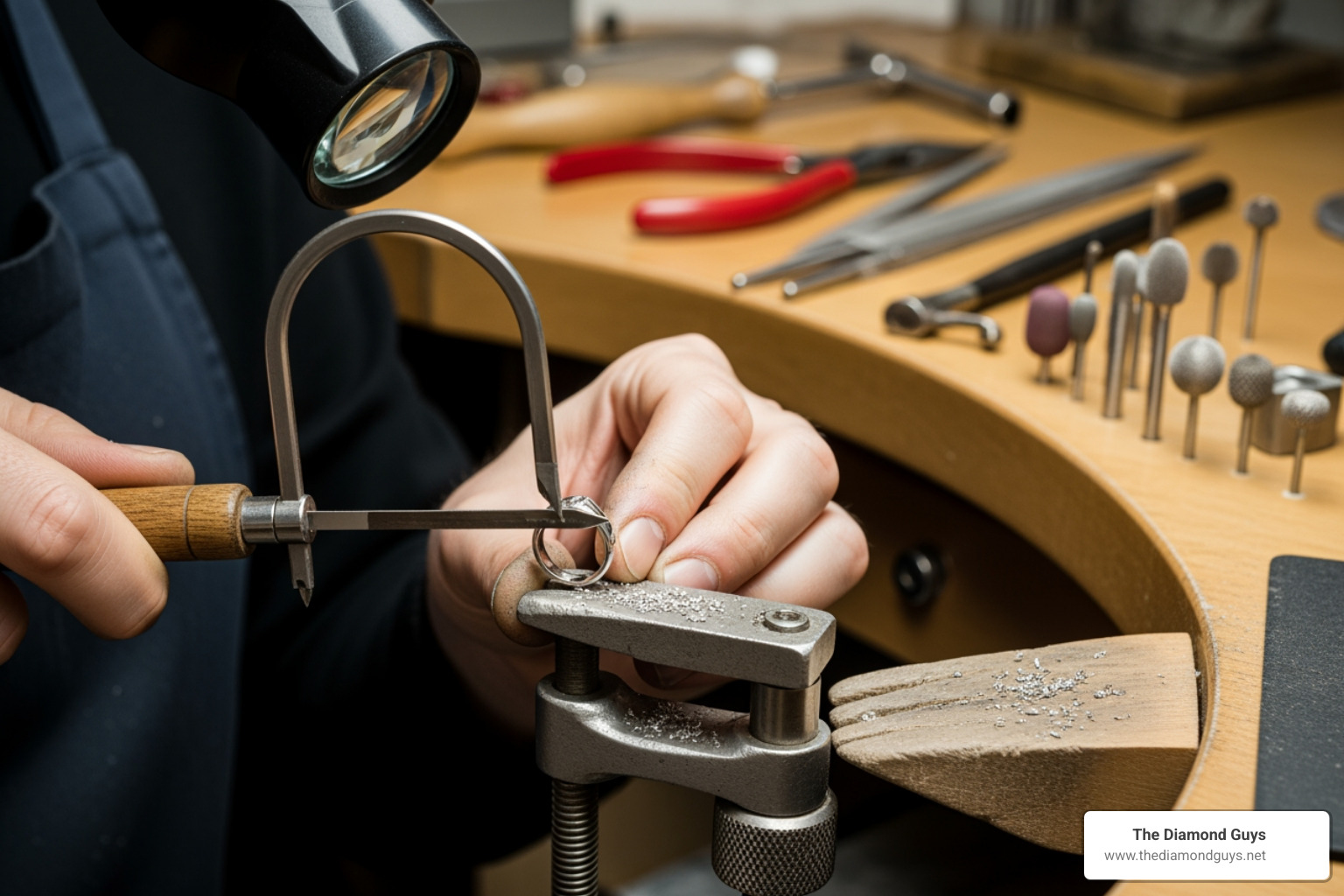
- Precise Measurement: The jeweler accurately measures your finger and the ring to determine the exact adjustment needed. Precision is critical for a perfect fit.
- Marking and Cutting the Shank: The ring is marked at the bottom of the shank (the plain part of the band). Using a specialized saw, the jeweler makes a precise cut to remove a small piece of platinum.
- Rejoining with a Laser Welder: The two cut ends are brought together. The jeweler uses a high-precision laser welder to fuse the platinum, melting the existing metal to create a seamless bond without solder.
- Reshaping on a Mandrel: The ring is carefully reshaped into a perfect circle on a jeweler's mandrel to ensure its proper form.
- Polishing and Finishing: The resized area and the entire ring are carefully polished to remove any tool marks, resulting in a smooth, brilliant surface with no evidence of the work.
How Jewelers Make a Platinum Ring Larger
Enlarging a platinum ring usually requires adding a new piece of metal. Stretching is rarely recommended for more than a quarter size, as it can thin and weaken the band.
- Precise Measurement: The process begins with an accurate measurement to determine how much platinum to add.
- Cutting and Preparing for Insertion: The jeweler cuts the bottom of the shank, preparing the gap to accommodate a new piece of platinum.
- Sourcing Matched Platinum: A piece of platinum that is an exact match in alloy and purity (e.g., 950 Platinum) is selected to ensure a seamless blend.
- Welding Two Seams: The new platinum insert is positioned in the gap. The laser welder fuses both ends of the insert to the original ring, creating two strong, invisible seams.
- Final Shaping and Polishing: The enlarged ring is reshaped on a mandrel into a perfect circle. A final, comprehensive polish ensures the entire ring has a uniform, brilliant luster.
Cost, Timeline, and Finding the Right Jeweler
Practical questions about cost, duration, and choosing the right professional are top of mind. For such a valuable piece, entrusting your platinum ring resizing to the right hands is paramount.
What to Expect for Your Platinum Ring Resizing Cost
The cost to resize a platinum ring typically ranges from $75 to $400 or more, reflecting the work's complexity. Key factors influencing the price include:
- Sizing Up vs. Sizing Down: Sizing up is often more expensive because it requires adding new platinum, increasing material and labor costs.
- Ring Width and Thickness: Wider or thicker bands require more labor to cut, weld, and polish, increasing the cost.
- Complexity of the Design: A simple band is less expensive to resize than a ring with intricate designs, engravings, or complex settings.
- Number of Gemstones: Rings with multiple gems, especially in pavé or channel settings, require extra precautions to protect the stones, which increases labor costs.
- Significant Size Change: A drastic adjustment (e.g., three or more sizes) requires more extensive work and thus costs more. Resizing is typically limited to two sizes.
- Why Platinum is More Expensive: Platinum's high melting point, density, and the need for laser welding make it more challenging and time-consuming to work with than gold, resulting in a higher cost.
We provide a detailed estimate before any work begins.
How to Choose a Jeweler with Platinum Expertise
Selecting the right jeweler is the most critical decision. Here are essential questions to ask any professional in Scottsdale, Los Angeles, or elsewhere:
- Do you perform platinum resizing in-house? An in-house jeweler offers better quality control, faster service, and direct communication. At The Diamond Guys, all work is done in our own workshops.
- Do you use laser welding for platinum? Confirm the jeweler uses this technology. If they mention traditional soldering for platinum, it's a red flag.
- Can you show me examples of your work? A reputable jeweler will be proud to showcase past platinum resizes, especially on rings with settings similar to yours.
- What is your experience with platinum? Ask about their jewelers' background and specialized training. Expertise in platinum comes from years of dedicated experience.
- How do you protect gemstones during resizing? A skilled jeweler will explain their process for safeguarding stones from heat and ensuring their security.
- What is your guarantee on the work? A professional should offer a clear guarantee on their workmanship, covering the resize and the security of any gemstones.
Finally, always check online reviews and testimonials for feedback on ring repairs and platinum work. Your ring deserves the best, and our experts are dedicated to providing just that. Find more about our custom design services at Design your destiny: Custom engagement rings in Scottsdale.
Alternatives and Limitations to Resizing
While platinum ring resizing is a common service, it's not always the best or even a possible solution. Certain designs have structural limitations, and we also offer temporary solutions for slightly loose rings.
When Resizing Isn't the Best Option
Some ring designs and conditions make resizing risky or impossible:
- Eternity Bands: Full eternity bands, with gems around the entire ring, cannot be resized because there is no plain metal to work on without disrupting the settings. The only option is often a complete remake.
- Rings with Detailed Engravings: If a ring has engravings that wrap fully around the band, resizing will break the pattern. Restoring the engraving perfectly can be impossible.
- Maximum Size Change (Typically Two Sizes): Pushing beyond a two-size adjustment can compromise the ring's structural integrity, making the band too thick, too thin, or distorted.
- When a Ring is Too Thin or Worn: If a ring is already very thin or has structural damage, resizing could cause it to break. A jeweler might recommend reinforcing the shank first or even a complete remake.
Temporary Solutions for a Slightly Loose Ring
If your ring is only slightly too large, or if permanent resizing isn't an option, several temporary solutions can improve the fit.
- Sizing Beads or "Speed Bumps": These are small metal balls added to the inside of the ring's shank. They fill the gap between your finger and the ring, preventing it from spinning. They are excellent for those with larger knuckles.
- Spring Inserts: A small, horseshoe-shaped metal piece that fits inside the band. It provides gentle tension to create a tighter fit and can often be removed later.
- Plastic Ring Guards: These are inexpensive, DIY plastic coils that wrap around the bottom of the band to reduce its inner diameter. They are effective but can be less comfortable than professional solutions.
Choosing the right option depends on the ring's design and your needs. Our jewelers can help you assess the best course of action. For rings that stack, sometimes another ring can help with fit, as explored in What is a stackable ring.
Frequently Asked Questions about Platinum Ring Resizing
We understand you have questions when considering platinum ring resizing. Here are answers to some of the most common concerns.
What are the signs of a poor platinum resizing job?
A poor resizing job can damage your ring's beauty and integrity. Here are the key signs to watch for:
- Visible Seam or Discoloration: This is the most obvious sign of a subpar job, often from using traditional solder instead of proper laser welding. An expert resize should leave a virtually invisible seam.
- An "Out-of-Round" or Misshapen Band: If the ring appears oval or lopsided, it was not properly reshaped on a mandrel after resizing.
- Loose Gemstones: If gems feel loose or rattle, their settings were likely disturbed by heat or distortion during the process. This is a serious concern.
- A Thinned-Out or Weakened Shank: If the band feels noticeably thinner or flimsier at the resized section, it has been weakened and is more susceptible to damage.
If you see any of these signs, consult a reputable jeweler immediately.
Can a platinum ring with a pavé diamond band be resized?
Yes, but it's a high-risk procedure. The delicate pavé setting, where small diamonds are set closely together, can be easily distorted. Resizing is usually limited to one size up or down to avoid loosening stones. This intricate work should only be attempted by a master jeweler who is highly experienced with platinum and uses a laser welder to minimize risk and heat transfer.
How many times can a platinum ring be safely resized?
The number of times a platinum ring can be safely resized depends on its original construction and the quality of any previous work. Each resizing process stresses the metal.
As a general guideline, it's best to limit resizing a platinum ring to 2 to 3 times over its lifetime to maintain its structural integrity. A jeweler should assess the ring's condition each time to determine if further resizing is safe.
Conclusion
Your platinum ring deserves a perfect fit, but resizing it is a complex process. As we've explored, platinum ring resizing requires a deep understanding of the metal's unique properties, the precision of laser welding, and a master jeweler's touch. Attempting it without this expertise can lead to visible seams, structural damage, and loose gemstones.
Choosing the right jeweler is paramount. Always seek professionals who perform platinum resizing in-house, use state-of-the-art laser welding, and have a proven track record with this challenging metal.
At The Diamond Guys, our master jewelers in Scottsdale and Los Angeles have the expertise and advanced tools to handle your platinum ring with the utmost care. We are dedicated to restoring your ring to its ideal fit, ensuring it looks as perfect as the day you first wore it. Trust us for expert guidance and meticulous craftsmanship. Learn more about our services at Keep your gems gleaming: Scottsdale's best for jewelry repair and appraisal.


